Olefin carpet is carpet made from polypropylene, a synthetic fiber that gets its color added while the plastic is still molten. That makes it almost impossible to fade or bleach, highly water-resistant, and one of the most affordable carpet options available — but it also attracts oily soil and crushes flat faster than nylon.
If you’ve bought a home in the last twenty years, there’s a good chance at least one room is covered in it. Olefin is the workhorse fiber behind most berber, most builder-grade bedroom carpet, and nearly every indoor/outdoor rug on the market. It’s a genuinely good fiber for the right room — and a frustrating one when nobody tells you how it behaves.
Here’s what it is, where it wins, where it doesn’t, and how to keep it looking like you didn’t buy the cheap stuff.
What Is Olefin Carpet Made Of?
Olefin is the textile name for polypropylene, a plastic polymer derived from propylene gas. The fiber is extruded rather than woven from a natural material, which means every strand comes out of the manufacturing process already identical — and already colored.
That last part matters more than anything else about this fiber. Olefin is solution-dyed, meaning pigment is mixed into the liquid polymer before the fiber is ever formed. The color isn’t sitting on the outside of the strand; it is the strand. Cut an olefin fiber in half and the color goes all the way through, like a carrot.
Nylon and most polyester carpet, by contrast, are dyed after the fact — color is applied to the surface of a finished fiber. That’s why bleach, sun, and pet urine can strip the color out of a nylon carpet and leave a permanent light spot, and why they usually can’t touch olefin.
Solution dyeing also uses dramatically less water than conventional carpet dyeing, and polypropylene is a #5 recyclable plastic. It’s not a perfect fiber environmentally — it’s still petroleum-derived — but it’s a lower-impact manufacturing process than most people assume.
How Is Olefin Different From Nylon and Polyester?
| Olefin (polypropylene) | Nylon | Polyester (PET) | |
|---|---|---|---|
| Cost | Lowest | Highest | Moderate |
| Resilience (bounces back) | Poor | Excellent | Fair |
| Fade & bleach resistance | Excellent | Poor to fair | Fair |
| Water-based stains | Excellent | Fair (needs treatment) | Very good |
| Oily & greasy soil | Poor — attracts it | Good | Fair |
| Moisture & mildew | Excellent | Fair | Good |
| Typical lifespan | 5–10 years | 12–20 years | 8–12 years |
| Best for | Basements, patios, rentals, low-traffic rooms | Stairs, hallways, whole-home | Bedrooms, budget-conscious remodels |
The short version: nylon is the durability fiber, polyester is the softness fiber, and olefin is the resistance fiber. It shrugs off the things that ruin other carpet and struggles with the things other carpet handles fine.
What Is Olefin Carpet Good For?
Sun-drenched rooms. In Arizona, this is olefin’s headline feature. West-facing living rooms, sunrooms, and Florida rooms destroy dyed carpet — you’ll see a visible bleached stripe along the window line within a few years. Solution-dyed olefin holds its color through UV exposure that would wreck a nylon.
Basements, patios, and anywhere damp. Olefin absorbs less than 0.1% of its weight in water. The fiber itself can’t support mold or mildew growth, which is why every indoor/outdoor carpet and nearly every covered-patio rug is olefin.
Homes with bleach-based cleaning routines or big spill risk. You can spill a glass of red wine, a splash of bleach, or a full cup of coffee on olefin and, caught reasonably quickly, get it out completely. Water-based stains don’t have anything to bond to.
Budget-sensitive projects. Rentals, flips, finished basements, guest bedrooms. Olefin routinely costs half of what a comparable nylon does, and in a room nobody walks through, its weaknesses barely show.
What Are the Downsides of Olefin Carpet?
It attracts oily soil. This is the big one. Polypropylene is oleophilic — it has a chemical affinity for oils and greasy residue. Cooking oil vapor, body oils from bare feet, the residue tracked in on shoes: olefin pulls it in and holds onto it. This is why an olefin traffic lane can look filthy while the carpet six inches away looks brand new, and why the fiber that “resists stains” somehow always looks dirty.
It crushes and mats. Olefin has poor resilience, meaning crushed fibers don’t spring back up. Furniture legs leave permanent divots. Traffic lanes flatten and stay flat. Cut-pile olefin frizzes and “uglies out” as the twist relaxes — one reason most olefin is sold as a low loop pile like berber, where the loop construction does the structural work the fiber can’t.
It melts. Polypropylene has a low melting point compared to other carpet fibers. Dragging a heavy appliance across an olefin carpet, or running a vacuum with an aggressive beater bar in one spot, can generate enough friction heat to fuse the fiber tips into a permanent shiny gray streak. It looks like a stain. It isn’t — it’s damage, and it can’t be cleaned out.
It wicks. Because the fiber won’t hold water but the backing will, moisture that soaks into the backing travels back up as the carpet dries, carrying dissolved soil with it. This is why a spot you cleaned yourself looks perfect at bedtime and reappears by morning.
How Do You Know If You Have Olefin Carpet?
A few practical tells:
- It’s a berber or low loop pile. Most residential berber is olefin.
- It feels slightly waxy or slick rather than soft and springy. Nylon has noticeable bounce when you press it and release.
- There’s no fading anywhere, even in rooms that get punishing afternoon sun.
- It was in the house when you bought it, and it was builder-grade. Olefin is the default cost-down fiber in spec homes.
- Your original invoice or carpet warranty lists “olefin,” “polypropylene,” or “100% PP.”
If you’re still not sure, any professional carpet cleaner can identify the fiber on site in about ten seconds — and should, before choosing a cleaning method.
How Do You Clean Olefin Carpet?
The method that works on olefin is nearly the opposite of what people assume. Because it resists water-based stains, homeowners tend to reach for water. Water isn’t the problem on olefin — oil is.
What works:
- Vacuum often, with the beater bar on a higher setting. Dry soil is abrasive, and olefin’s flat traffic lanes hide it well. Raise the vacuum head to avoid friction heat.
- Blot spills immediately. Olefin gives you a real window here that other carpet doesn’t. Blot, don’t rub — rubbing untwists and frizzes the fiber.
- Use an oil-cutting prespray, not a general spotter. Standard consumer spot cleaners are formulated for water-based stains, which olefin already handles. They do very little against the greasy soil that’s actually making your carpet look dark.
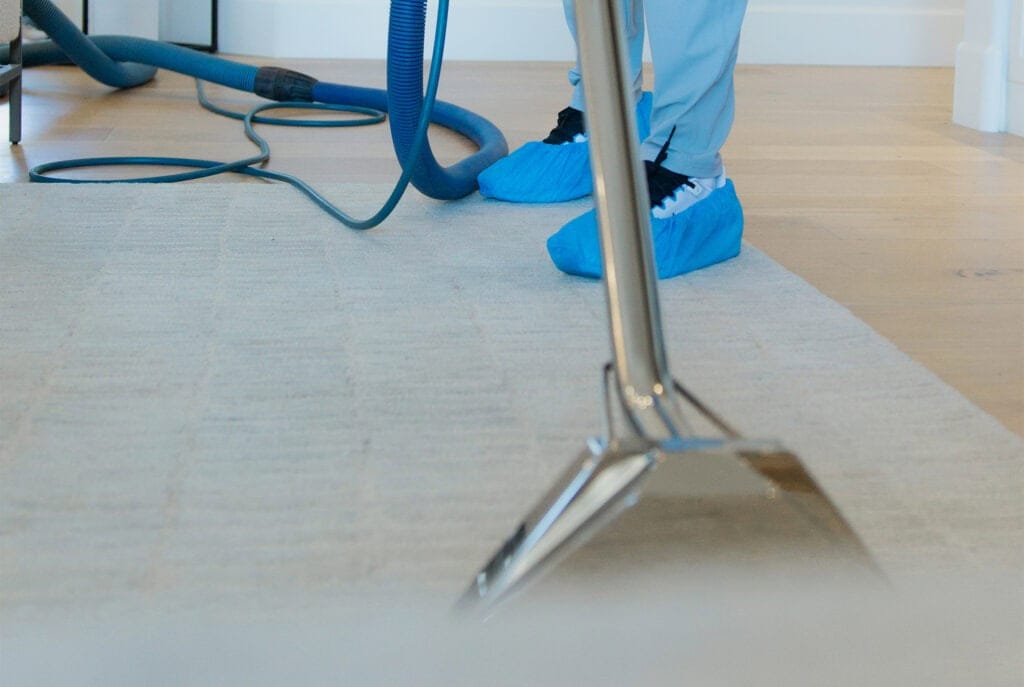
- Hot water extraction with proper dwell time and thorough grooming. Done correctly, this lifts the oily film out of the fiber rather than pushing it deeper.
- Dry it fast. Air movers, ceiling fans, open windows. Fast drying is what prevents wicking.
What to avoid:
- Over-wetting. More water is not more cleaning on olefin — it’s just more wicking.
- Rental machines with soapy detergents. Soap residue left in the fiber becomes an oil magnet, and the carpet re-soils faster than it did before you cleaned it.
- Excessive heat. Combine high heat with friction and you’re back to melted fiber tips.
- Dragging furniture back onto damp carpet. Metal and wood legs will leave marks that don’t come out.
If your olefin has gone flat and dark in the walkways and nothing you’ve tried has touched it, that’s not permanent — it’s almost always oily soil that hasn’t been addressed with the right chemistry. See the difference in our before/after gallery.
How Long Does Olefin Carpet Last?
Expect 5 to 10 years in a typical home, and less in a hallway or on stairs. Olefin rarely fails because it wears through — it fails because it flattens and stops looking new. Regular vacuuming and professional cleaning every 12 to 18 months makes a meaningful difference here, since matting is accelerated by the abrasive grit that builds up at the base of the pile.
So, Is Olefin Carpet Any Good?
Yes — in the right room, and with realistic expectations.
Put olefin in a basement, a patio, a sunroom, a guest bedroom, or a rental and it will outperform fibers that cost twice as much. Put it in a main hallway or on stairs and you’ll be replacing it in five years wondering what you did wrong.
The single most useful thing to know about olefin is that its stain resistance and its appearance problem are two different issues. It genuinely resists stains. It genuinely gets grimy anyway. Once you understand it’s oil and not staining you’re fighting, the carpet becomes a lot easier to keep looking good.
Ready to bring your carpet back? Coconut Cleaning Co. uses eco-friendly, fiber-specific cleaning methods — we identify what your carpet is actually made of before we touch it, so olefin gets treated like olefin. Book with the Coconut team today!
Frequently Asked Questions
Yes. Olefin is the textile industry’s name for polypropylene fiber. The two terms are used interchangeably on carpet spec sheets and warranties.
It’s a reasonable choice. Olefin resists moisture and won’t lose its color to pet urine the way dyed nylon can, and it can’t support mold growth. However, urine that soaks through to the backing and pad still needs professional extraction, and pet oils contribute to the greasy soil olefin attracts.
Yes, hot water extraction is the preferred professional method — but the water temperature and moisture level need to be controlled. Too much heat can damage the fiber and too much water causes soil to wick back to the surface as it dries.
Almost always one of two reasons: oily soil that wasn’t broken down with an oil-cutting prespray, or wicking, where moisture in the backing carried soil back up to the surface during drying. Both are solvable with the right method.
Yes, typically by a significant margin — often around half the cost per square foot. The tradeoff is lifespan and resilience, so nylon can be the better value in high-traffic areas over a 15-year horizon.
No. Because olefin is solution-dyed, with pigment built into the fiber itself, it’s exceptionally resistant to UV fading — one of the main reasons it’s used for sunrooms, patios, and indoor/outdoor applications.