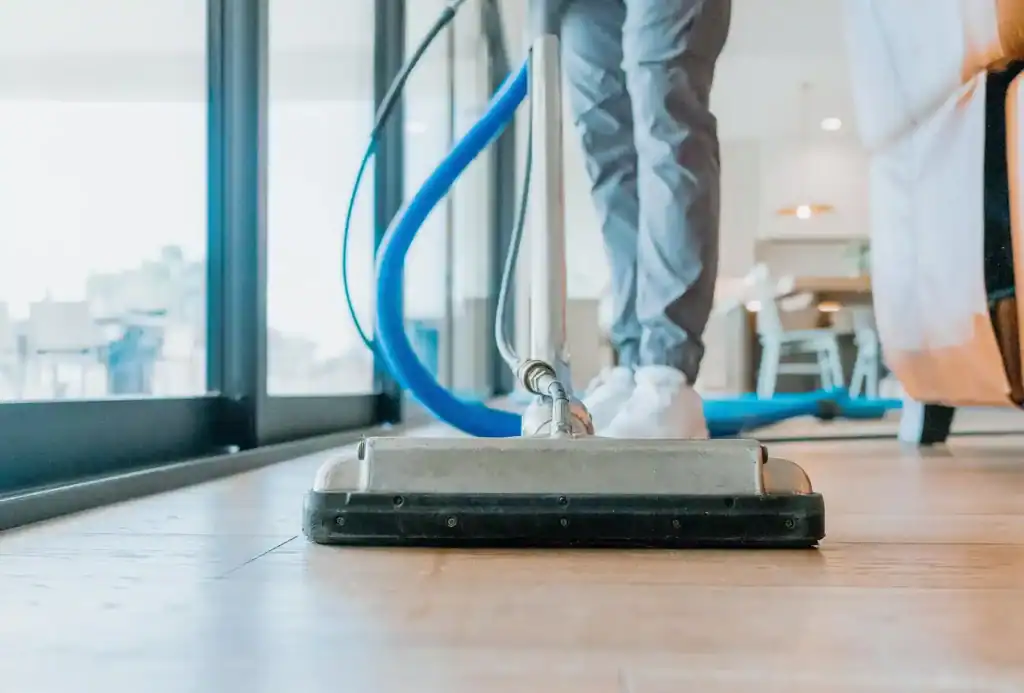
Wood floors are durable, but they are not indestructible. One of the fastest ways homeowners damage hardwood is by using the wrong cleaning products or tools — often without realizing it.
If you’re searching what not to use on wood floors, this guide breaks down the most common mistakes, why they cause damage, and safer alternatives that help protect your floors long-term.
Why Using the Wrong Products Damages Wood Floors
Wood floors are sealed, not waterproof. The finish protects the surface, but harsh chemicals, excess moisture, and abrasive tools slowly break that protection down.
Over time, improper cleaning leads to:
- Dull or cloudy finishes
- Scratches and scuffing
- Warping or cupping
- Residue buildup
- Premature wear
Knowing what to avoid is just as important as knowing how to clean wood floors properly.
1. Vinegar and Acidic Cleaners
Vinegar is often recommended online as a “natural” cleaner — but it’s one of the worst things you can use on wood floors.
Why it’s harmful:
- Acid breaks down the protective finish
- Repeated use causes dullness and streaking
- Can lead to permanent surface damage
Even diluted vinegar should never be used on hardwood.
2. Steam Mops
Steam mops are a major cause of wood floor damage.
Why they’re unsafe:
- Heat opens wood pores
- Moisture seeps beneath the finish
- Can cause swelling, warping, and cracking
Steam cleaning is better suited for tile and grout cleaning — not wood floors.
3. Excess Water or Wet Mopping
Wood floors should never be soaked.
Common mistakes include:
- Over-wetting mops
- Letting water sit on the surface
- Using buckets instead of damp microfiber mops
Moisture penetration is one of the most expensive forms of wood floor damage to repair.
4. Abrasive Pads and Scrub Brushes
Steel wool, stiff brushes, and rough scrubbing pads scratch wood finishes almost immediately.
Damage caused by abrasives:
- Visible swirl marks
- Loss of protective coating
- Increased dirt buildup over time
Always use soft microfiber tools instead.
5. Ammonia or Bleach-Based Cleaners
Harsh chemical cleaners may make floors look shiny at first — but they destroy finishes underneath.
Why to avoid them:
- Strip protective coatings
- Dry out wood fibers
- Create uneven discoloration
These products are sometimes used safely for carpet cleaning or tile cleaning, but they are never appropriate for hardwood.
6. Wax or Oil Products (Unless Manufacturer-Approved)
Many homeowners unknowingly apply wax or oil products that:
- Leave sticky residue
- Attract dirt
- Interfere with future refinishing
Unless your floor specifically calls for wax, avoid it entirely.
7. Furniture Dragging Without Protection
Sliding furniture directly across wood floors causes:
- Deep scratches
- Gouges in the finish
- Long-term cosmetic damage
Using felt pads and maintaining furniture through regular furniture cleaning reduces the risk of oils and grit transferring to the floor.
Safer Alternatives for Wood Floor Care
Instead of harsh products, stick to:
- Wood-floor-specific cleaners
- Lightly damp microfiber mops
- Regular dust removal
- Professional wood floor cleaning when buildup occurs
Keeping nearby surfaces clean also helps. Area rug cleaning and carpet cleaning reduce grit that scratches wood floors, while air duct cleaning helps limit dust settling on hard surfaces.
When Professional Wood Floor Cleaning Makes Sense
If your floors look dull despite careful cleaning, residue buildup may be the issue. Professional wood floor cleaning safely removes residue without damaging the finish — something DIY products can’t do effectively.
This is especially important in homes with:
- Pets
- High foot traffic
- Open floor plans connecting to tile and carpet
Key Takeaway
Understanding what not to use on wood floors is essential to protecting your investment.
Avoid vinegar, steam, harsh chemicals, abrasive tools, and excess water. Use gentle methods, clean surrounding surfaces regularly, and rely on professional care when buildup or wear becomes noticeable.
Proper care keeps wood floors looking beautiful, durable, and damage-free for years to come.