Sectionals and large sofas are some of the most used — and most abused — pieces of furniture in a home. With multiple cushions, seams, and fabric panels, they trap dust, oils, pet hair, and allergens far more easily than smaller couches.
This guide explains how to clean sectionals and large sofas properly, what you can safely do yourself, and what mistakes shorten the life of your furniture.
Why Sectionals Get Dirty Faster Than Other Furniture
Large sofas and sectionals collect more debris because they have:
- More seating surface
- Deeper seams and cushion gaps
- Heavier daily use
- Multiple fabric contact points
Much like carpets and area rugs, upholstery fibers act like filters, trapping dirt and allergens deep below the surface.
Step 1: Check the Upholstery Cleaning Code
Before cleaning anything, find the manufacturer’s tag under the cushions or frame. It will list a cleaning code:
- W – Water-based cleaners are safe
- S – Solvent-based cleaners only
- WS – Water or solvent-based cleaners
- X – Vacuum only (no moisture)
Skipping this step is one of the most common causes of permanent upholstery damage.
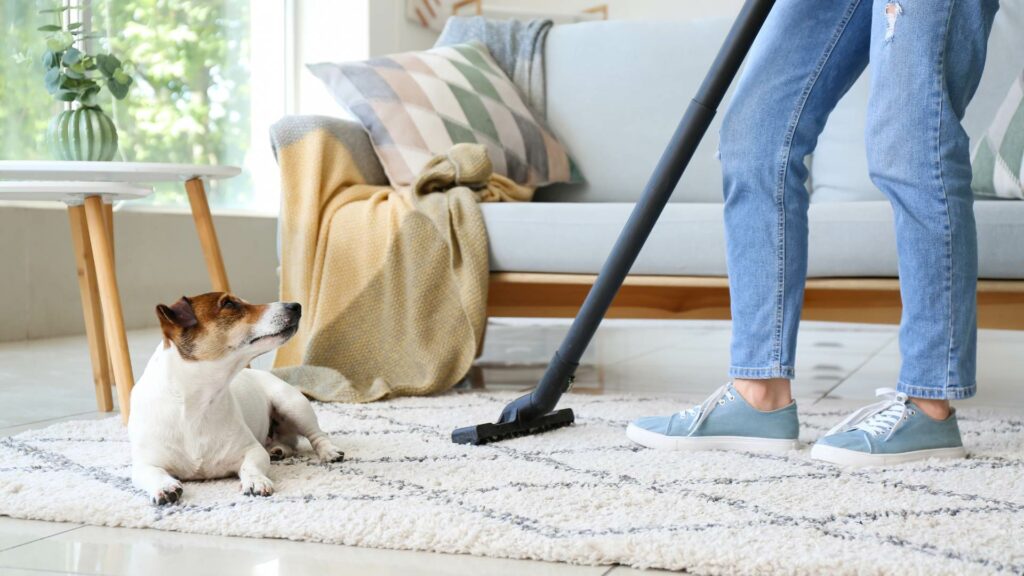
Step 2: Vacuum Thoroughly (This Matters More Than You Think)
Dry debris must be removed before any moisture touches the fabric.
Vacuum:
- Cushion tops and sides
- Creases and seams
- Under and between cushions
- Along the base and frame
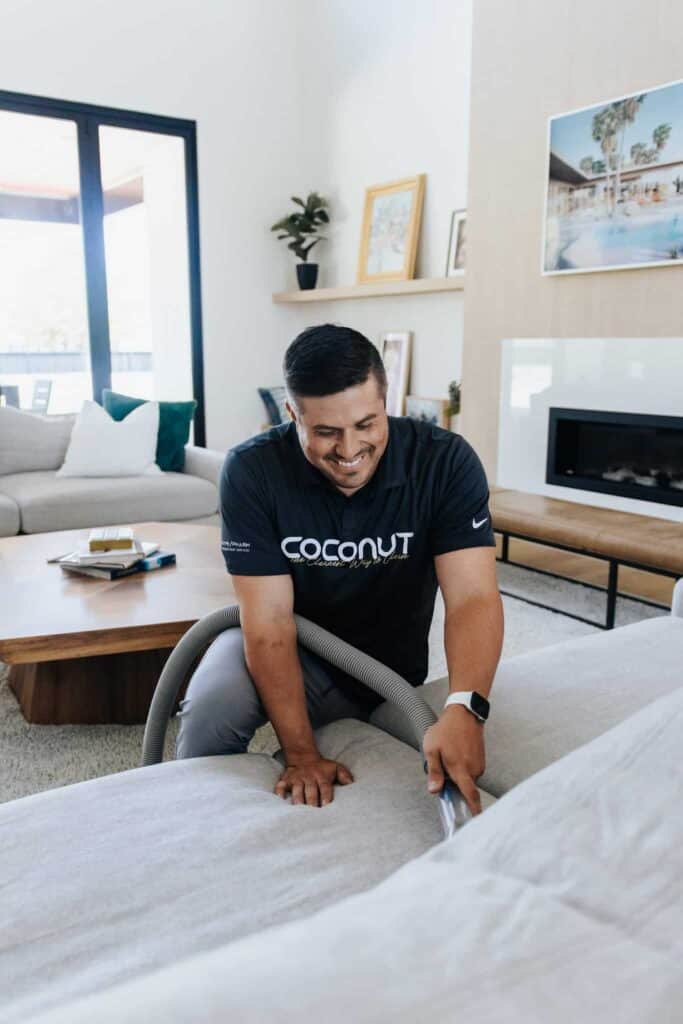
Using an upholstery attachment helps prevent pushing debris deeper into the fabric. This same dry-extraction principle is used in professional furniture cleaning and carpet cleaning.
Step 3: Spot Clean Stains Carefully
For spot cleaning:
- Blot spills immediately — never scrub
- Use minimal moisture
- Always test in a hidden area first
For water-safe fabrics, a mild detergent mixed with warm water can work for light stains. Oil-based stains, body oils, and food grease are more difficult and often require professional upholstery cleaning methods.
Step 4: Cleaning Cushions and Cushion Covers
If cushion covers are removable:
- Check care labels first
- Wash on cold if allowed
- Air dry completely to prevent shrinkage
For non-removable cushions:
- Avoid soaking
- Lightly mist and blot
- Ensure full drying to prevent odors or mildew
Over-wetting cushions is one of the fastest ways to ruin a sectional.
Step 5: Don’t Ignore Hidden Areas
Large sofas trap dirt where people rarely clean:
- Between sectional joints
- Under cushions
- Along the back and base
Dust and allergens in these areas often migrate to carpets, wood floors, and tile surfaces throughout the home. Keeping surrounding surfaces clean — including tile and grout and wood floors — reduces how much debris ends up back in your furniture.
Common Mistakes That Damage Sectionals
Avoid these common DIY errors:
- Using carpet shampooers on upholstery
- Over-saturating fabric
- Using bleach or harsh chemicals
- Scrubbing aggressively
- Steam cleaning fabrics not designed for heat
These mistakes cause discoloration, water rings, fabric distortion, and long-term odor issues.
How Often Should Sectionals and Large Sofas Be Cleaned?
Recommended cleaning frequency:
- Vacuum weekly
- Spot clean as needed
- Deep clean every 6–12 months
Homes with pets, kids, or allergy concerns benefit from more frequent deep upholstery cleaning — similar to the maintenance schedules used for area rugs and carpets.
DIY Maintenance vs Deep Cleaning
DIY cleaning is effective for maintenance, but it has limits.
DIY works best for:
- Routine vacuuming
- Light surface stains
- Odor prevention
Deep cleaning is needed for:
- Embedded dirt
- Pet urine and odors
- Body oil buildup
- Allergens trapped in padding
This is why upholstery, carpet, air ducts, and flooring all play a role in overall indoor cleanliness.
Final Takeaway
Knowing how to clean sectionals and large sofas correctly helps preserve fabric, maintain comfort, and prevent permanent damage.
With proper vacuuming, careful spot treatment, and routine deep cleaning, large upholstered furniture can stay cleaner, fresher, and last significantly longer — without unnecessary wear or risk.