Dining chairs with fabric seats take more abuse than almost any other piece of furniture. Food spills, grease, drink splashes, body oils, and daily use all add up — and because they’re smaller than sofas, people often overlook proper cleaning until stains and odors become obvious.
This guide explains how to clean dining chairs with fabric seats safely, what you can do at home, and what mistakes cause permanent damage.
Why Fabric Dining Chairs Get Dirty So Quickly
Fabric dining chairs collect buildup faster because:
- They’re exposed to food and drink daily
- Oils from hands and clothing transfer easily
- Crumbs and debris settle into seams
- Chairs are rarely vacuumed
Just like carpets and area rugs, fabric seats trap debris deep within the fibers — even when they look clean on the surface.
Step 1: Check the Fabric Cleaning Code
Before cleaning, locate the manufacturer’s tag under the seat or frame. Look for these codes:
- W – Water-based cleaners are safe
- S – Solvent-based cleaners only
- WS – Water or solvent-based cleaners
- X – Vacuum only
Using the wrong cleaning method is the fastest way to discolor or damage upholstery.
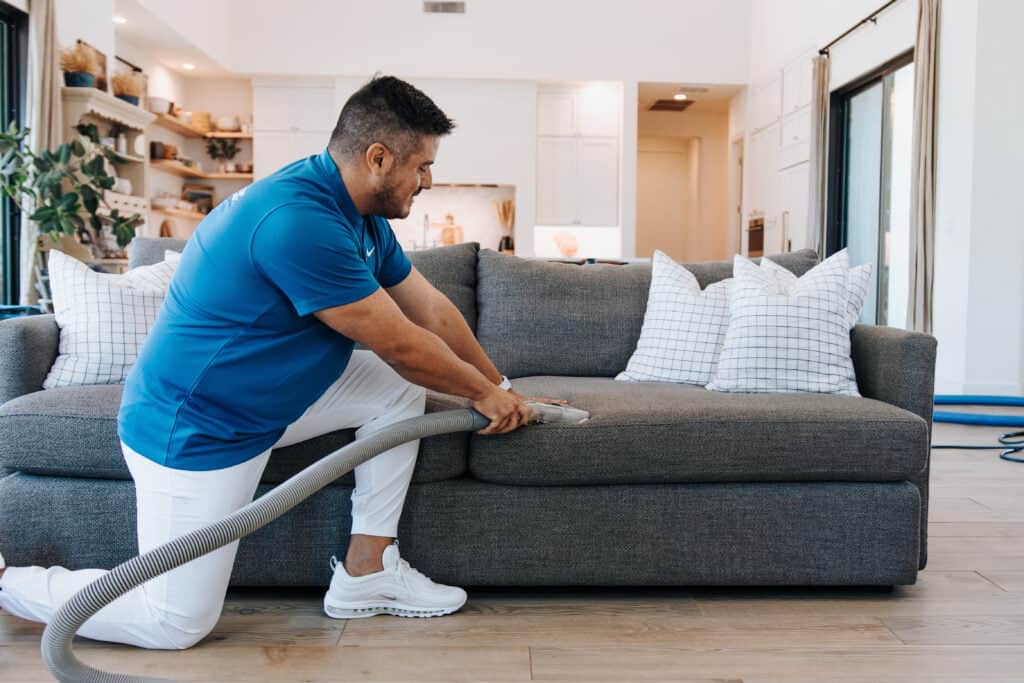
Step 2: Vacuum Thoroughly Before Using Any Moisture
Dry debris must be removed first — this step is critical.
Vacuum:
- The entire seat surface
- Seams and piping
- Creases where crumbs collect
Skipping vacuuming pushes dirt deeper once moisture is applied. This same principle applies to furniture cleaning and carpet cleaning.
Step 3: Spot Clean Food and Drink Stains
For most water-safe fabrics:
- Mix a small amount of mild detergent with warm water
- Lightly blot the stain (never scrub)
- Work from the outside in
- Use minimal moisture
For greasy food stains, blotting alone may not be enough. Oils bond to upholstery fibers and often require professional-grade upholstery cleaning methods to remove completely.
Step 4: Treat Odors the Right Way
Fabric dining chairs can absorb odors from food, spills, and humidity.
To reduce odors:
- Sprinkle baking soda lightly on dry fabric
- Let it sit 15–30 minutes
- Vacuum thoroughly
If odors persist, the issue may be deeper than the surface — similar to how odors can remain trapped in carpets, area rugs, or even air ducts.
Step 5: Avoid Over-Wetting the Fabric
One of the biggest mistakes homeowners make is using too much water.
Over-wetting causes:
- Water rings
- Fabric distortion
- Musty smells
- Mold or mildew growth
Dining chairs have thin padding that dries slowly. Light, controlled moisture is key.
Common Mistakes That Ruin Fabric Dining Chairs
Avoid these common errors:
- Scrubbing aggressively
- Using bleach or harsh cleaners
- Steam cleaning fabrics not designed for heat
- Using carpet machines on chairs
- Letting cushions dry without airflow
These mistakes cause fading, texture damage, and lingering odors.
How Often Should Fabric Dining Chairs Be Cleaned?
Recommended schedule:
- Vacuum monthly
- Spot clean spills immediately
- Deep clean every 6–12 months
Homes with kids, pets, or frequent entertaining benefit from more frequent professional furniture cleaning — especially when dining chairs match other upholstered furniture in the home.
Why Dining Chair Cleanliness Affects the Rest of Your Home
Dirty dining chairs contribute to:
- Odors spreading to nearby carpets
- Debris transferring to rugs and flooring
- Increased allergens
Maintaining surrounding surfaces like tile and grout, wood floors, and area rugs helps reduce how quickly dining chairs become dirty again.
Final Takeaway
Knowing how to clean dining chairs with fabric seats properly helps prevent stains, odors, and premature wear.
With routine vacuuming, careful spot treatment, and periodic deep cleaning, fabric dining chairs can stay clean, fresh, and comfortable — without risking damage to the upholstery.