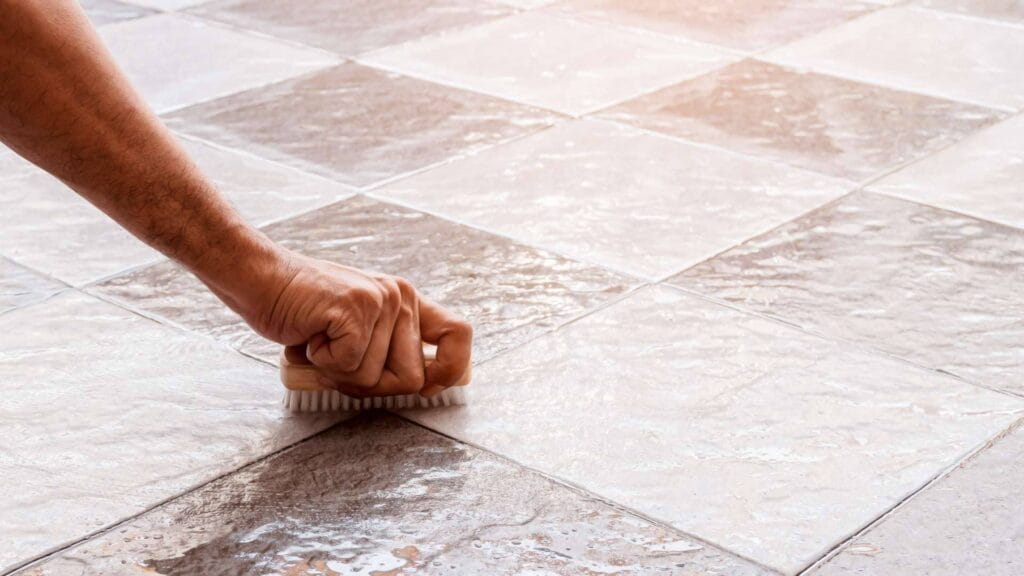
Mold in tile grout is a common problem in bathrooms, kitchens, laundry rooms, and anywhere moisture lingers. Grout is porous by nature, which makes it especially vulnerable to mold growth if it stays damp, dirty, or poorly ventilated.
This guide breaks down exactly how to remove mold from tile grout using effective DIY methods, when stronger solutions are necessary, and how to prevent mold from coming back.
Why Mold Grows in Tile Grout
Mold thrives in environments that are:
- Warm
- Damp
- Poorly ventilated
Tile itself is relatively resistant to mold, but grout absorbs moisture, soap residue, and organic debris. Over time, this creates the perfect environment for mold spores to settle and grow.
Common areas affected include:
- Shower walls and floors
- Bathroom floors near tubs
- Kitchen backsplashes
- Laundry room tile
If mold is spreading across large sections of grout, it’s often a sign that deeper moisture issues or buildup exist and professional tile and grout cleaning may be required.
Mold vs. Mildew in Grout
Before cleaning, it helps to know what you’re dealing with:
- Mildew: Light gray or white, powdery, easier to remove
- Mold: Black, green, or dark brown, often embedded deeper into grout
Both should be removed promptly, but mold requires more thorough cleaning.
How to Remove Mold from Tile Grout: DIY Methods
1. Baking Soda and Vinegar Method
This method works well for light to moderate mold.
Steps:
- Mix baking soda with water to create a thick paste
- Apply directly to moldy grout lines
- Spray white vinegar over the paste
- Let it sit for 10–15 minutes
- Scrub with a stiff grout brush
- Rinse with warm water and dry thoroughly
This method is safe for most tile surfaces and aligns well with eco-friendly cleaning practices.
2. Hydrogen Peroxide for Deeper Mold
Hydrogen peroxide penetrates porous grout more effectively than vinegar alone.
Steps:
- Use 3% hydrogen peroxide
- Apply directly to grout lines
- Let it sit for 10 minutes
- Scrub with a grout brush
- Rinse and dry completely
This is especially effective for bathroom grout mold.
3. Oxygen Bleach (Non-Chlorine)
Oxygen bleach is safer than chlorine bleach and effective for widespread mold.
Steps:
- Mix according to label directions
- Apply to grout
- Allow to dwell for 10–20 minutes
- Scrub and rinse
Avoid mixing oxygen bleach with vinegar or other acids.
4. Steam Cleaning Grout
Steam cleaning uses high heat to kill mold spores and lift stains from grout pores. This is one of the most effective non-chemical methods for grout cleaning and pairs well with professional-grade tile and grout cleaning systems.
What NOT to Do When Cleaning Moldy Grout
- Do not mix bleach and vinegar
- Do not use metal brushes that damage grout
- Do not leave grout wet after cleaning
- Do not ignore recurring mold—it will return
If mold keeps coming back, grout may be deteriorating or absorbing moisture from beneath the tile.
How to Prevent Mold from Returning
Preventing mold is just as important as removing it.
Key Prevention Tips:
- Dry tile surfaces after use
- Use bathroom exhaust fans
- Seal grout annually
- Clean tile regularly with non-residue cleaners
Routine maintenance and periodic deep tile and grout cleaning dramatically reduce mold growth.
When Mold Requires Professional Cleaning
DIY methods work well for surface-level mold. However, professional cleaning may be necessary if:
- Mold covers large areas
- Grout stays dark after cleaning
- Mold returns quickly
- Odors persist
Professional systems clean deeper than household methods and restore grout color while improving indoor air quality, especially when combined with services like air duct cleaning.
Related Cleaning Topics to Explore
Mold prevention often overlaps with other home cleaning areas. You may also find value in learning more about:
- Proper carpet cleaning routines
- Upholstery and furniture cleaning in humid environments
- Area rug cleaning for moisture-prone spaces
- Wood floor cleaning to prevent mold under surface damage
Final Thoughts
Removing mold from tile grout requires the right approach, patience, and consistency. With proper cleaning techniques and preventative care, grout can stay clean, healthy, and mold-free for years.
Consistent maintenance and deeper periodic cleaning are key to protecting tile surfaces and maintaining a cleaner home overall.