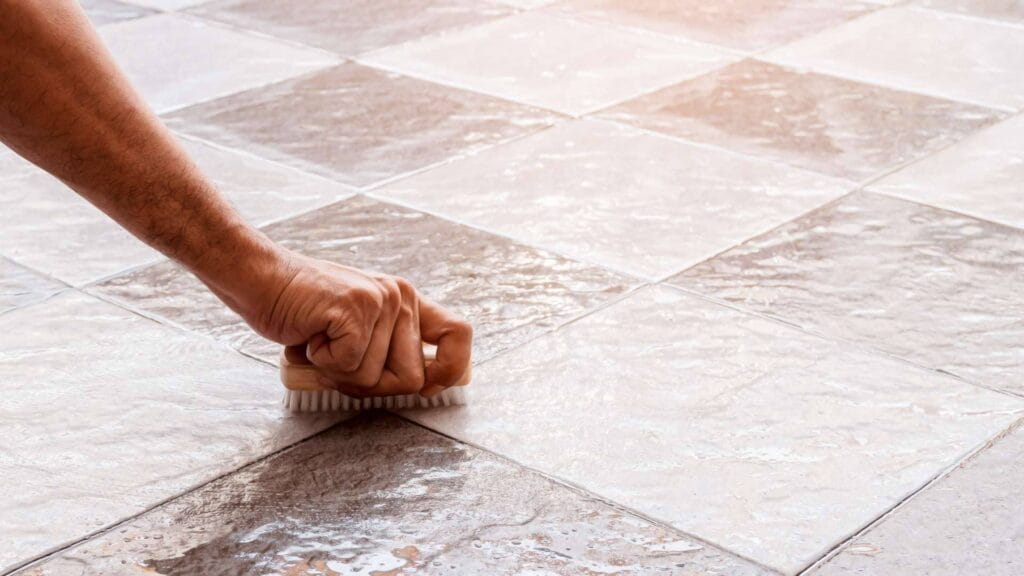
DIY grout cleaning focuses on surface-level soil. It can improve appearance but has clear limitations.
Common DIY Grout Cleaning Methods
- Baking soda and vinegar
- Hydrogen peroxide
- Oxygen-based cleaners
- Steam cleaners
- Grout brushes and toothbrushes
These methods loosen light grime but do not extract deeply embedded contaminants.
What DIY Grout Cleaning Does Well
DIY methods can:
- Remove recent surface dirt
- Improve light discoloration
- Reduce odors temporarily
- Maintain grout between deep cleanings
They work best when grout is already in good condition and cleaned frequently.
Limitations of DIY Grout Cleaning
DIY grout cleaning cannot:
- Remove years of embedded soil
- Restore original grout color
- Remove grease buildup in kitchens
- Eliminate mold growth inside grout pores
Scrubbing harder often causes grout erosion, making future staining worse.
Professional Grout Cleaning: How It’s Different
Professional grout cleaning uses:
- High-pressure extraction
- Heat-controlled cleaning
- Alkaline and acidic rinses
- Specialized agitation tools
This process flushes contaminants out of grout rather than pushing them deeper.
The approach is similar to professional carpet cleaning and furniture cleaning, where extraction—not surface scrubbing—is the key difference.
What Professional Grout Cleaning Accomplishes
Professional cleaning can:
- Remove deeply embedded grime
- Restore grout closer to its original color
- Remove grease and soap residue
- Sanitize grout pores
In many homes, grout has never been properly cleaned since installation.
The Role of Grout Sealing
One of the biggest differences between DIY and professional cleaning is sealing.
After deep cleaning, grout should be sealed to:
- Reduce future staining
- Prevent moisture absorption
- Make routine cleaning easier
Unsealed grout will darken again quickly, regardless of how it’s cleaned.
DIY vs Professional Cleaning: Side-by-Side Comparison
DIY Grout Cleaning
- Improves surface appearance
- Inexpensive
- Requires frequent repetition
- Limited effectiveness
- Deep extraction
- Long-lasting results
- Restores appearance more fully
- Can include sealing
How Grout Affects Other Surfaces in the Home
Dirty grout contributes to:
- Odors spreading into nearby carpets
- Debris transferring to area rugs
- Increased allergens
Homes with tile floors often also have wood floors, upholstered furniture, and air ducts that benefit from coordinated cleaning routines rather than isolated DIY efforts.
How Often Should Grout Be Cleaned?
General guidelines:
- Light DIY maintenance: monthly
- Kitchen grout: every 6–12 months
- Bathroom grout: every 6–9 months
High-traffic tile areas require more frequent deep cleaning, especially when grout lines are light-colored.
Final Takeaway
DIY grout cleaning is useful for maintenance, but it has clear limits. Once grime penetrates grout pores, professional cleaning becomes the only way to truly remove it.
Understanding the difference between surface cleaning and deep extraction helps homeowners make better decisions — not just for tile and grout, but for carpets, furniture, wood floors, and overall indoor cleanliness.