Wood floors add warmth, value, and durability to a home. But they require the right cleaning methods to avoid dulling, warping, or damaging the finish.
If you’re wondering how to clean wood floors without damaging them, the key is understanding three things:
- The type of finish on your floors
- The role moisture plays in damage
- Which products and tools are safe — and which are not
This guide explains everything homeowners need to know to clean hardwood floors safely and protect them long term, or when its time to for a professional wood floor cleaning.
Why Wood Floors Get Damaged During Cleaning
Most hardwood floor damage doesn’t come from foot traffic. It comes from:
- Excess moisture
- Harsh chemicals
- Abrasive tools
- Improper mopping techniques
Wood is porous. Even when sealed, it can absorb moisture through seams and worn finish areas. Over time, this can lead to:
- Warping
- Swelling
- Cupping
- Finish breakdown
- Discoloration
Cleaning correctly is about minimizing moisture and avoiding products that strip protective coatings. The best way to safely protect the finish of your wood floors is hiring a professional wood floor cleaning company.
Step 1: Identify Your Wood Floor Finish
Before cleaning, determine whether your floors are:
Surface-Sealed (Polyurethane or Urethane Finish)
Most modern hardwood floors are sealed. These floors have a protective top layer that resists moisture.
You can safely use:
- Damp microfiber mops
- Hardwood-safe cleaners
- Light moisture with quick drying
Penetrating Oil or Wax Finish
Older or specialty wood floors may have oil-based finishes.
These require:
- Minimal moisture
- Specialized cleaners
- Periodic reconditioning
If unsure, treat the floor as delicate and avoid excess water.
Step 2: Dry Clean First
The safest way to protect wood floors is to remove debris before adding any moisture.
Use:
- A microfiber dust mop
- A soft-bristle broom
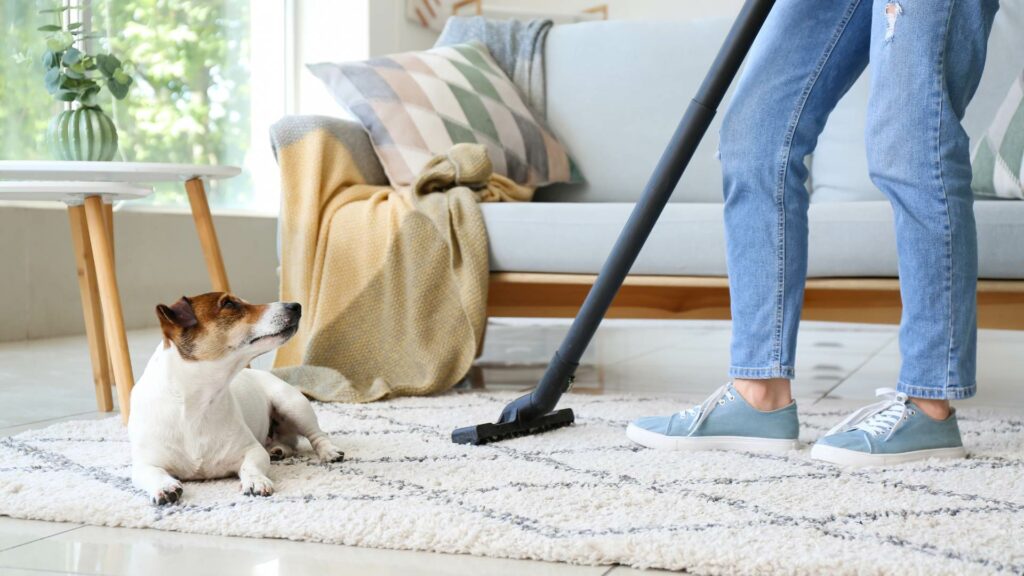
- A vacuum with a hardwood floor setting (no beater bar)
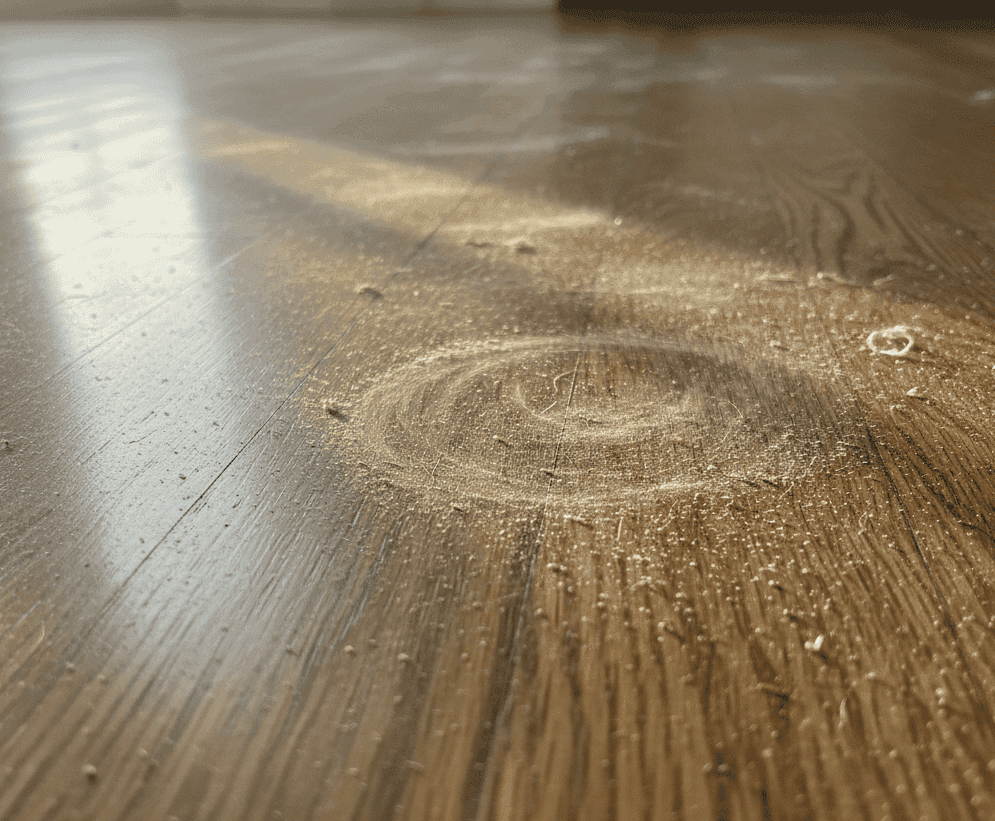
This removes grit and dirt that can scratch the finish when mopping.
Step 3: Use Minimal Moisture
The biggest mistake homeowners make is over-wetting the floor.
When mopping:
- Use a lightly damp (not wet) microfiber mop
- Wring out thoroughly
- Clean in small sections
- Dry immediately if moisture remains
You should never see standing water on hardwood floors.
What NOT to Use on Wood Floors
Avoid these common mistakes:
Steam Mops
Steam forces moisture into seams and can break down finishes over time.
Vinegar and Water Solutions
While often recommended online, vinegar is acidic and can dull polyurethane finishes.
Ammonia or Harsh Chemicals
These strip protective coatings and reduce the lifespan of your floors.
Soaking Wet Mops
Excess water is the leading cause of hardwood floor damage.
Best Way to Clean Wood Floors Safely
For routine cleaning:
- Dust mop 2–3 times per week
- Vacuum weekly using a hardwood-safe setting
- Damp mop monthly (or as needed) with a hardwood-approved cleaner
Always follow product dilution instructions carefully.
How to Protect Your Hardwood Floor Finish
Cleaning is only part of maintenance. Protection matters just as much.
Use Rugs in High-Traffic Areas
Entryways, hallways, and stairs experience the most wear.
Add Felt Pads to Furniture
Prevents scratches and finish wear.
Maintain Proper Indoor Humidity
Wood expands and contracts with humidity changes. Ideal indoor humidity is typically between 35–55%.
Remove Shoes Indoors
Shoes bring in grit that scratches surfaces.
What About Deep Cleaning Hardwood Floors?
Over time, residue from cleaners, foot oils, and dust builds up even with regular maintenance.
Professional hardwood floor cleaning uses controlled moisture and specialized equipment to:
- Remove embedded dirt
- Eliminate residue buildup
- Restore natural shine
- Extend finish lifespan
This is especially helpful in high-traffic homes or homes with pets and children. Weekly cleanings are recommended, but every 6 months its best to a hire a professional wood floor cleaners.
How Wood Floors Compare to Carpet and Tile in Maintenance
Each flooring type requires different care strategies:
- Carpet traps allergens and needs deep extraction cleaning.
- Upholstered furniture and area rugs also collect dust and debris over time.
- Tile and grout accumulate buildup in porous grout lines.
- Air ducts circulate dust that eventually settles onto floors.
Understanding how these systems interact helps maintain a cleaner overall indoor environment.
Common Questions About Cleaning Wood Floors
Can you mop hardwood floors?
Yes — but only with a damp (not wet) microfiber mop and hardwood-safe cleaner.
How often should wood floors be cleaned?
Dry cleaning several times per week. Damp cleaning monthly or as needed.
How do you remove sticky residue from hardwood floors?
Use a hardwood-approved cleaner and a microfiber cloth. Avoid scraping or soaking.
Can water ruin hardwood floors?
Yes. Excess moisture can cause warping, swelling, and finish damage.
Final Thoughts
Learning how to clean wood floors without damaging them comes down to three principles:
- Minimize moisture
- Avoid harsh chemicals
- Protect the finish
With proper care, hardwood floors can last decades while maintaining their natural beauty.
Wood floors are durable — but only when cleaned the right way.