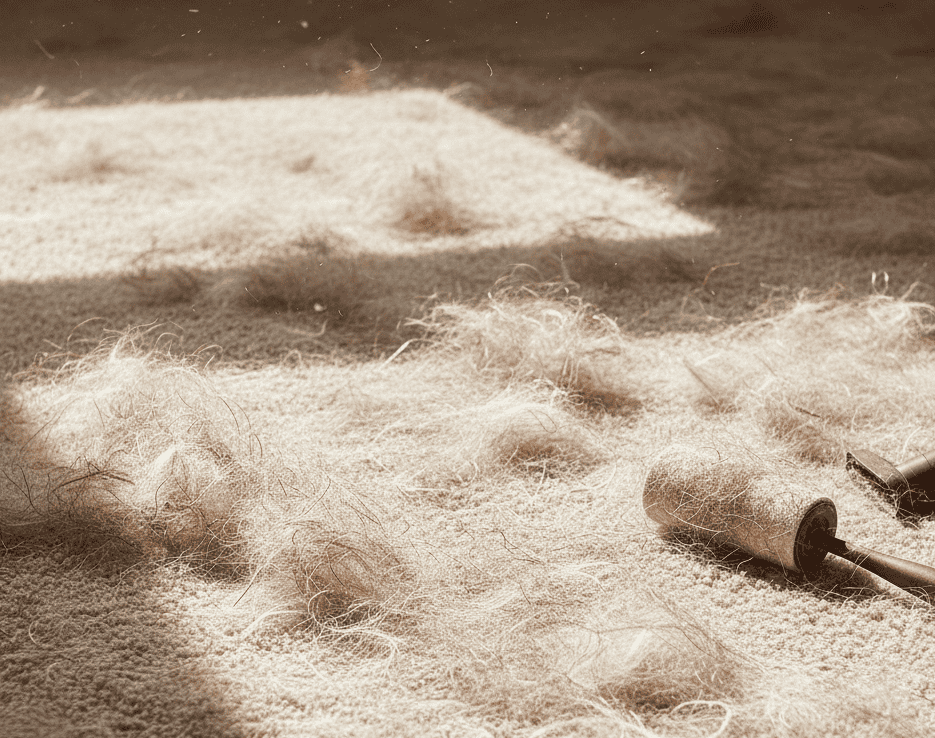
Pet hair is one of the hardest things to remove from carpet. Even with regular vacuuming, hair from dogs and cats can weave deep into carpet fibers, cling to padding, and resurface constantly—especially in high-traffic areas, stairs, and near furniture.
This guide breaks down the most effective ways to remove pet hair from carpet, including simple DIY methods, tools that actually work, and habits that help keep hair from building up in the first place.
Why Pet Hair Sticks to Carpet So Easily
Pet hair clings to carpet because of:
- Static electricity
- Textured carpet fibers
- Oils from pets’ skin
- Foot traffic pushing hair deeper into the pile
Hair tends to collect most around couches, beds, stairs, and rugs—especially in homes with upholstered furniture and area rugs.
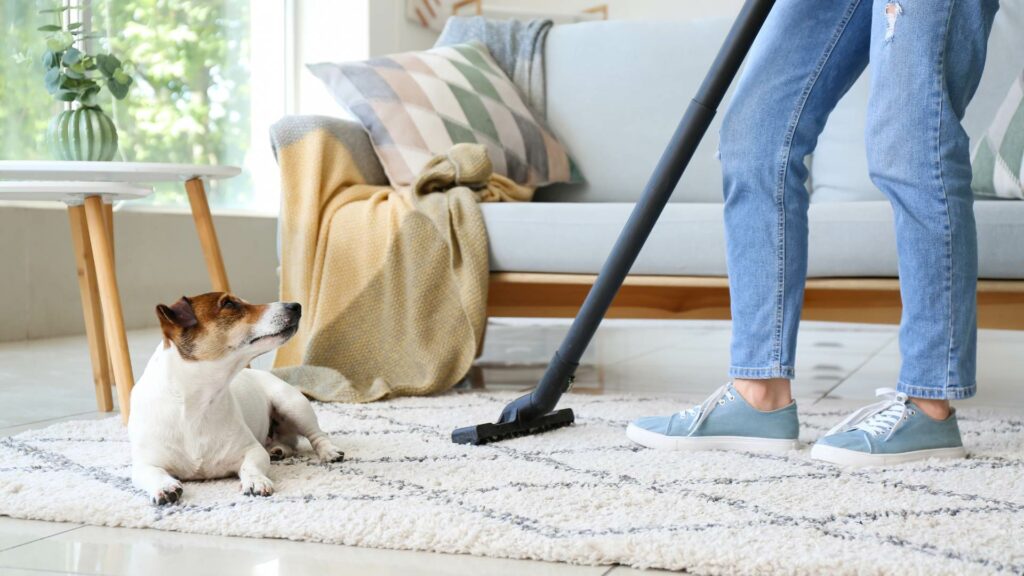
1. Start with the Right Vacuum Technique
Vacuuming works best when done correctly.
Tips for better results:
- Use a vacuum with strong suction and a pet-hair attachment
- Vacuum slowly in multiple directions
- Go over high-traffic areas twice
- Empty the vacuum frequently
Vacuuming alone won’t remove embedded hair, but it’s the necessary first step before deeper removal methods.
2. Use a Rubber Squeegee or Rubber Broom
Rubber tools are one of the most effective DIY methods.
Why it works:
Rubber creates friction and static that pulls pet hair out of carpet fibers.
How to use it:
- Lightly drag the rubber edge across the carpet
- Hair will clump together for easy removal
- Vacuum afterward to finish the job
This method works especially well on stairs and low-pile carpet.
3. Try Damp Rubber Gloves
A simple, low-cost solution that works surprisingly well.
How to do it:
- Put on rubber gloves
- Lightly dampen them with water
- Run your hands across the carpet
Hair will stick to the gloves and can be rinsed off repeatedly.
4. Use Baking Soda to Loosen Embedded Hair
Baking soda helps loosen hair trapped deep in carpet fibers.
Steps:
- Sprinkle baking soda lightly over the carpet
- Let it sit for 10–15 minutes
- Vacuum slowly
This method also helps neutralize pet odors and freshen the carpet.
5. Lint Rollers for Small Areas
Lint rollers work best for:
- Small patches
- Entryways
- Areas near pet beds
- Around furniture legs
They’re not practical for whole rooms but are great for quick touch-ups.
6. Don’t Forget Furniture and Rugs
Pet hair doesn’t just live in carpet—it transfers constantly between surfaces.
Cleaning your couch cushions, chairs, and sectionals with furniture and upholstery cleaning reduces the amount of hair that falls back onto the carpet.
Likewise, hair trapped in rugs will continue shedding unless addressed with proper area rug cleaning.
7. Reduce Hair at the Source
The less loose hair in your home, the easier carpet maintenance becomes.
Helpful habits:
- Brush pets regularly
- Wash pet bedding weekly
- Keep pets off high-pile carpet when possible
- Maintain clean air circulation with air duct cleaning to reduce airborne hair and dander
8. When DIY Isn’t Enough
If pet hair has been building up for months or years, it may be embedded below the surface—especially in homes with thick carpet or heavy pet traffic.
Professional carpet cleaning equipment lifts hair, dander, and debris from deep within the carpet pile and padding, reaching what vacuums and DIY tools can’t.
For homes with pets, pairing carpet care with wood floor cleaning, tile cleaning, and area rug cleaning helps keep hair from spreading between surfaces.
How Often Should You Remove Pet Hair from Carpet?
- Light shedding pets: weekly
- Heavy shedding pets: 2–3 times per week
- Homes with allergies: frequent vacuuming + deeper cleaning
Consistent maintenance prevents hair from becoming permanently embedded.
Final Takeaway
Removing pet hair from carpet takes more than just a vacuum. Using the right tools, techniques, and routines makes a noticeable difference—and keeping surrounding surfaces clean helps stop the cycle.
With a combination of regular vacuuming, rubber tools, baking soda, and whole-home cleaning habits, pet hair becomes much easier to manage.